Reflective yoga philosophy for understanding the mind, gently reshaping habits, and reconnecting with meaning through lived practice.
Course Structure & Curriculum
A reflective journey through key philosophical ideas, meditation practices, and inquiry, designed to support understanding, integration, and inner transformation.
Introduction
Yoga as a path of transformation, with guidance on how to move through the course and use the supporting materials.
Yoga Beyond Asana
Exploring what yoga means beyond posture, including yogic philosophy, psychology, and the nature of inner practice.
Yogas-Chitta-Vritti-Nirodhah
Unpacking Patanjali’s central sutra and understanding yoga as a state of being rather than an activity.
The Kleshas
Working with ignorance, attachment, aversion, ego, and fear, and recognising how constant self-judgement shapes experience.
Memory & Samskaras
Understanding habitual patterns, neuroplasticity, and how repeated thoughts shape the mind and behaviour.
Conscious Samskaras
Learning how to cultivate beneficial patterns through awareness, daily reflection, and practice on and off the mat.
Meditation
Exploring meditation as a state, different points of focus, and the understanding that nothing needs to be fixed.
Practice: Sankalpa Meditation
A guided meditation practice for intention setting, including a downloadable Sankalpa meditation to support integration.
Why Yoga Philosophy Matters
Yoga philosophy offers more than ideas, it offers insight into how we relate to thought, memory, habit, and identity. Many people practise yoga physically yet feel disconnected from its deeper purpose. Philosophy provides a way to understand the mind, soften habitual patterns, and reconnect with meaning.
At ālaya wellbeing, philosophy is approached as lived understanding rather than theory. Rooted in Patanjali’s Yoga Sutras and informed by contemporary neuroscience, learning unfolds through reflection, meditation, and practical inquiry, supporting clarity, awareness, and inner steadiness in everyday life.
Who This Course Is For
Suitable for both teachers and practitioners seeking depth, with no previous philosophy study required.
Yoga teachers wishing to deepen their understanding of Patanjali’s Yoga Sutras
Practitioners curious about the philosophical foundations of yoga
Those interested in meditation, self-inquiry, and conscious change
Anyone seeking tools to work with habits, memory, and intention
Learning at Your Own Rhythm
This self-paced course takes approximately 2-3 hours to complete. Lessons are presented in manageable segments, allowing time for reflection. You can return to the material anytime through your profile, revisiting insights as your understanding deepens.
Guidance & Experience
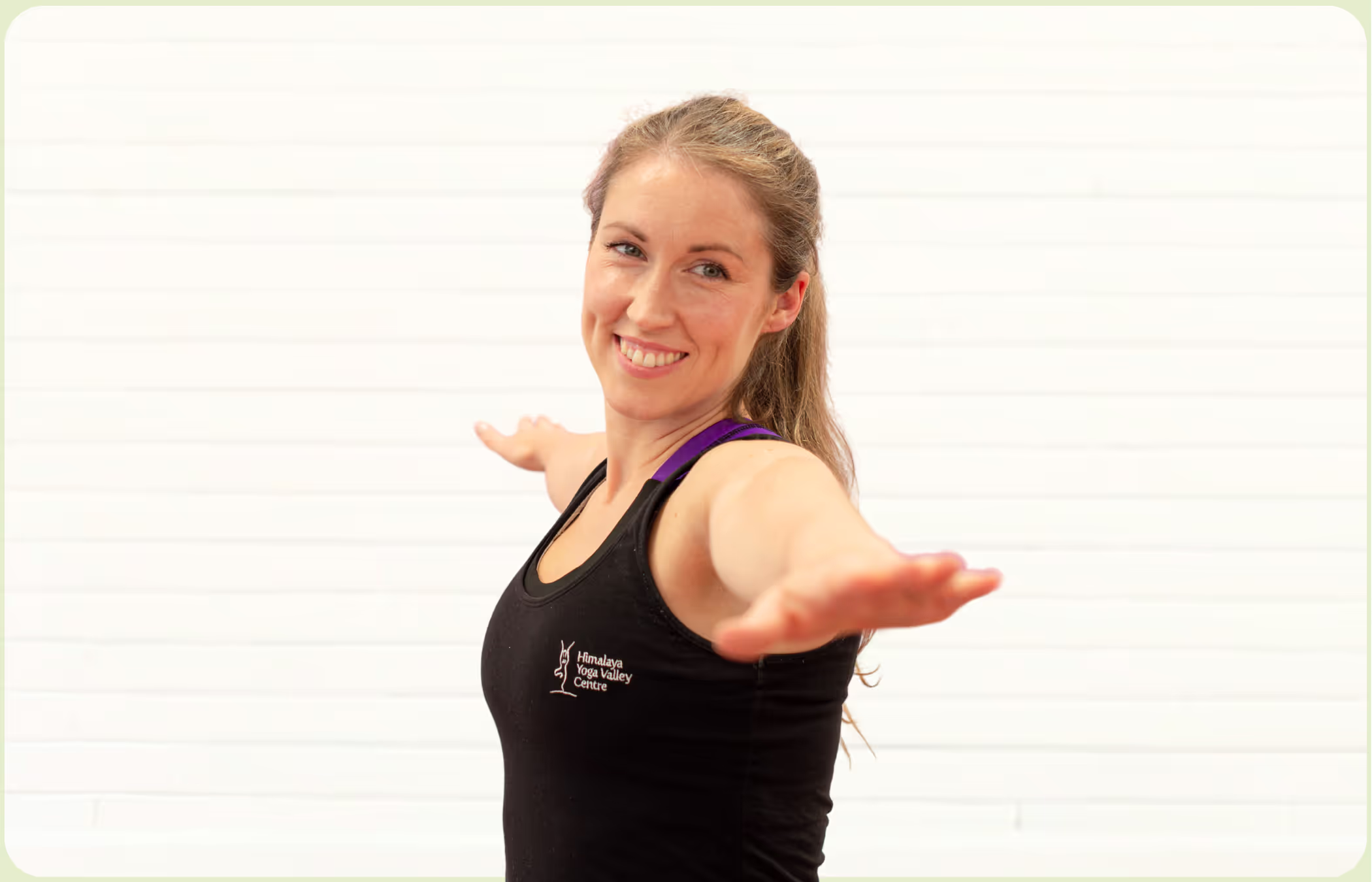
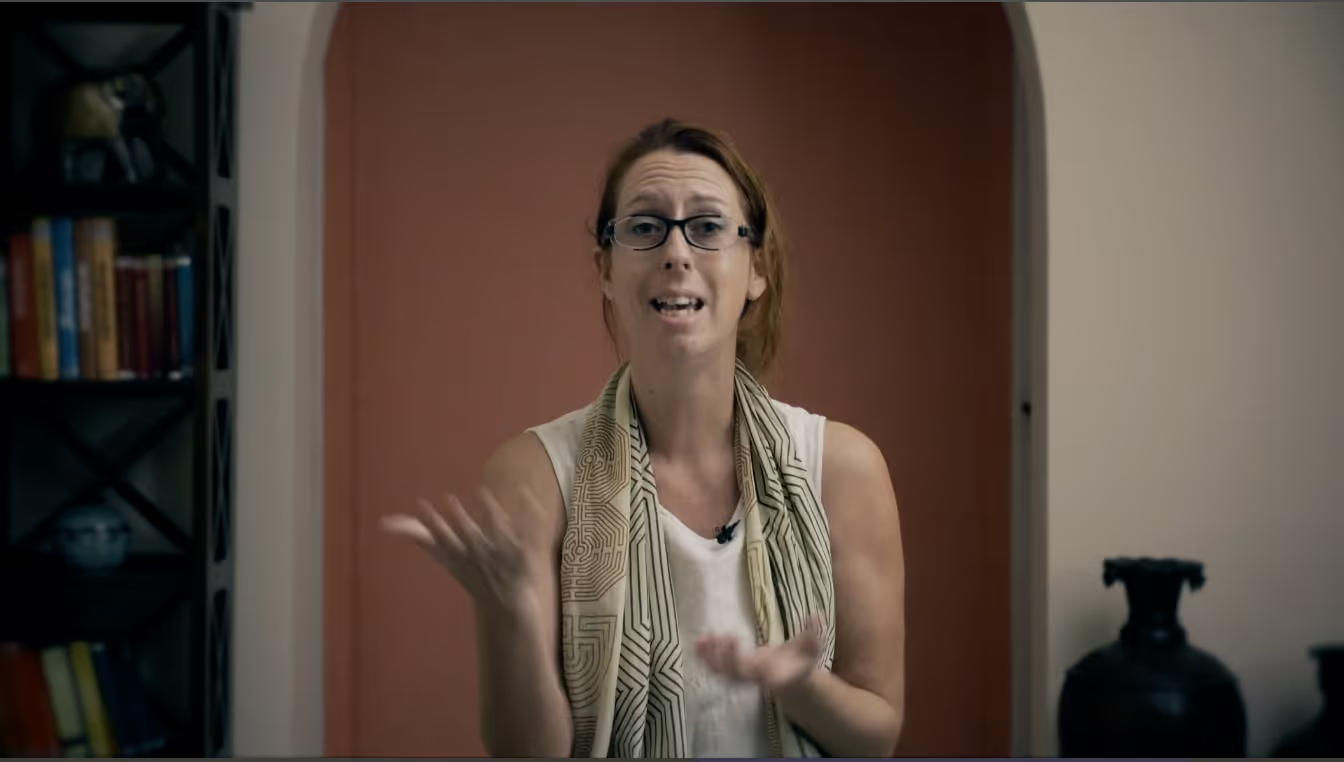
Viriam Kaur
Viriam has been teaching yoga, meditation, and awareness practices for over 15 years and is a senior teacher within the Himalaya Yoga Valley tradition. For nearly a decade, she has guided philosophy on teacher training programmes.
Her teaching presents philosophy as a lived journey rather than a lecture. Through clarity, reflection, and experiential inquiry, students are invited to perceive the vastness of yoga as a transformative inner practice.
What You’ll Take With You
A clearer understanding of Patanjali’s Yoga Sutras
Insight into habits, memory, and conscious change
Practical tools for meditation and intention setting
A deeper relationship with yoga beyond physical practice
Course Pricing
A single enrollment offering long-term access and steady learning.
Many Short Courses offer Certificates of Completion and Continuing Professional Development (CPD) hours, supporting professional standards and ongoing learning.
Great yoga teacher training! The anatomy section was super helpful, and the online anatomy teacher explained everything so clearly. The example classes, along with the adjustment and alignment guidance, were really useful. I highly recommend this training
RL
Rosita Liaudanskaite
I’m glad that I chose Himalaya Yoga Valley among all different other yoga schools. Many thanks to professionals, responsible, experienced, friendly and supportive tutors, staff and all team!!!
MH
Michelle Healy
Recommend!
Lovely studio, great teachers, and class packs are good value.
LH
Laura Higgins
Highly recommend !
Being able to do it online in my own time was great for me as I was full time as a school teacher. I loved being able to go back over lectures and live classes to deepen my understanding!
DE
David Emery
Each teacher an expert in their specific subject. I was looked after from the moment i got met by the taxi driver with the welcome pack to my graduation. i cant recommend Himalaya valley enough. Each one of the teachers an expect in their specific subject ...
JB
Jo Black
Excellent course. I have just finished the course & would highly recommend it if you’ve been considering the training. The course is great to fit in around your other commitments due to it being online but having the hybrid option is an added bonus...
PW
PWynne
Just do it , it’s amazing 🧘. I would absolutely recommend this course. I started with doubtful voices in my head but all of this knowledge and practice has quashed those doubts .I love the straight forward way in which the course is delivered. For me the flexibility of doing online classes at a time that suits as well as the live classes was a vital part of my success...
MB
Marian Bruen
Don't wait, enrol today!! Enrolling with Himalaya Yoga Valley was one of the best decisions I ever made! The course is so well thought-out and tutors are knowledgeable, encouraging and inspirational. The curriculum covers so much but is broken down into manageable lessons, which makes the online course so accessible to a busy, working mum, like myself...
No. While yoga teachers may find the material especially enriching, the course is equally suitable for practitioners who want to understand yoga beyond physical postures and explore its philosophical foundations.
Do I need prior knowledge of yoga philosophy to join?
No previous philosophy study is required. Concepts are introduced clearly and progressively, making the course accessible even if this is your first encounter with yoga philosophy.
What texts does the course work with?
The course works primarily with Patanjali’s Yoga Sutras, using them as a framework to explore the mind, habit patterns, and inner transformation in a practical, relatable way.
How is neuroscience included in the course?
Modern neuroscience is used to shed light on how habits, memory, and neuroplasticity function, helping bridge ancient yogic insights with contemporary understanding of the mind.
Is this course theoretical or experiential?
The course balances reflection with practice. Philosophical ideas are supported by meditation, inquiry, and practical exercises that help integrate understanding into daily life.
What are samskaras and kleshas, and why are they important?
Samskaras and kleshas describe habitual patterns and sources of inner friction. Understanding them offers insight into how thoughts and behaviours form, and how they can be worked with consciously.
What is Sankalpa meditation?
Sankalpa meditation is a practice of intention-setting, supporting conscious change by working gently with the subconscious mind. The course includes a guided Sankalpa meditation for ongoing use.
How long will it take to complete the course?
The estimated completion time is 2–3 hours. However, the course is self-paced, allowing you to pause, reflect, and return to the material whenever it feels supportive.
Will this course support my meditation practice?
Yes. The course explores meditation as a state rather than a technique, offering insight into different approaches and helping you understand what happens in the mind during meditation.
How long do I have access to the course?
Once enrolled, you have lifetime access. This allows you to revisit lessons, meditations, and reflections as your understanding deepens over time.
Subscribe to our Newsletters
Thank you! Your submission has been received!
Oops! Something went wrong while submitting the form.
A global yoga school rooted in authentic tradition, guiding your journey from practice to purpose.
Level 2, Sth Mall, Cork City, Co.Cork, Ireland T12 YTY5